

What Really Defines a Luxury Property?
When people hear the word luxury in real estate, the first thing that usually comes to mind is price.
But price is only one part of the equation.
In South Florida, the numbers show just how high the luxury market has moved. According to MIAMI REALTORS® + RWorld, during the first half of 2026, a single-family home needed to sell for at least $3.3 million to fall within the top 5% of sales across the five-county South Florida market. For the top 1%, the threshold reached $10.7 million. In Miami-Dade County, the ultra-luxury threshold was even higher, at $15 million.
Those numbers are significant, but they also raise a more interesting question:
What actually makes a property luxury?
For me, the answer has much less to do with a specific price tag and much more to do with what makes a property difficult to replace.
1. When does a property become “luxury”?
There is no single feature that automatically makes a property luxury.
A $5 million property is not necessarily more distinctive than a $3 million property simply because it costs more. Price reflects the market, but luxury is also connected to the characteristics behind that price.
Location is one of the first things I evaluate.
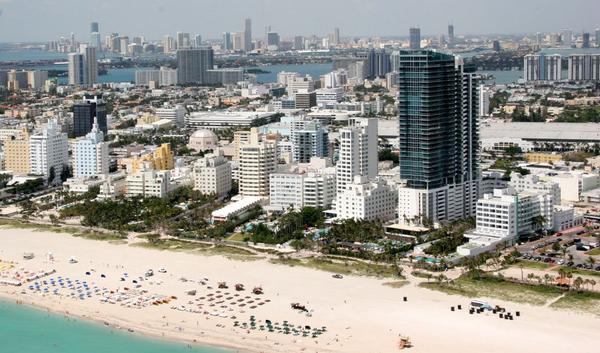
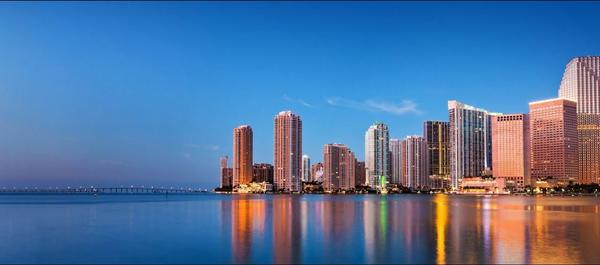
A waterfront residence in Miami Beach, a private estate in Coral Gables, or a well-positioned property in Coconut Grove can offer something that cannot simply be reproduced elsewhere. The surrounding neighborhood, access, views, privacy, and available land all contribute to the property's position within the market.
Then there is the property itself.
Architecture, construction quality, materials, floor plan, outdoor spaces, views, privacy, and amenities can all influence whether a home stands apart from other properties in its segment.
Services can also matter, particularly in luxury condominium developments. Concierge services, wellness amenities, private dining, valet, security, and other conveniences can become part of the ownership experience.
Ultimately, luxury is about the combination.
2. The factors that create true scarcity
One of the most important concepts I consider when evaluating luxury real estate is scarcity.
A property becomes particularly interesting when there are very few comparable alternatives available to buyers.
Think about a direct oceanfront residence with unobstructed views. Or a large estate with significant privacy in an established neighborhood where additional land is extremely limited.
Those characteristics create a form of scarcity that goes beyond the number of properties currently listed for sale.
This is particularly relevant in markets like Miami, where geography naturally limits certain types of inventory.
International demand adds another dimension.
South Florida's luxury market attracts buyers from both within the United States and around the world. MIAMI REALTORS® + RWorld reported that out-of-state buyers represented 10% of domestic buyers in the first half of 2026, with buyers from New York, New Jersey, California, Illinois, and Massachusetts among the leading sources. The luxury thresholds for several of these buyer groups were also significantly higher than those for Florida residents.
That diversity of demand matters because a truly distinctive property may be competing for attention across a much larger buyer pool.
3. Why price alone does not define long-term value
A high price can tell me something about where a property sits within the market, but it does not tell me everything I need to know.
When I analyze a luxury property, I want to understand why buyers are willing to pay that price.
- Is the property in a location with limited comparable inventory?
- Does it offer something that newer construction cannot easily reproduce?
- Is the architecture genuinely distinctive?
- Does the property provide privacy, views, land, or access that are difficult to find elsewhere?
- And perhaps most importantly, will those characteristics continue to matter to buyers in the future?
This last question is critical.
Luxury real estate is not simply about owning something expensive today. For an investor, the ability of a property to remain desirable over time can be just as important as its current market value.
Recent South Florida data reinforces the strength of demand at the higher end of the market. MIAMI REALTORS® + RWorld reported that million-dollar sales increased 21.7% year-to-date through August 2026, while sales of properties priced at $10 million or more reached their highest six-month level earlier in the year.
These figures do not mean every luxury property will perform the same way. They do, however, demonstrate the scale and depth of the market at the high end.
4. How I evaluate luxury real estate
When I work with a client looking at a luxury property, I do not want to stop at the asking price.
I want to understand the story behind the property.
I look at the location, surrounding development, inventory, architecture, construction, privacy, views, amenities, ownership costs, and the type of buyer the property is likely to attract in the future.
I also look at what cannot be changed.
You can renovate a kitchen. You can redesign a bathroom. You can update finishes and technology.
But you cannot move a property to the waterfront, create additional land where none exists, or easily reproduce an established neighborhood.
Those permanent characteristics are often where the real distinction lies.
That is why I believe analyzing luxury real estate requires a different perspective. The question is not simply, "How much does this property cost?"
The better question is:
"What makes this property difficult to replace?"
Conclusion
The South Florida luxury market has reached significant price thresholds, with the top 5% of single-family sales reaching $3.3 million and the top 1% reaching $10.7 million in the first half of 2026.
But these numbers are only the starting point.
For me, true luxury is defined by the combination of location, scarcity, architecture, quality, privacy, services, and lasting desirability. A property's price reflects what the market is willing to pay today. Its distinctive characteristics help explain why buyers may continue wanting it tomorrow.
As Isaac de Castro at Brown Harris Stevens, I help buyers and investors look beyond the price tag and understand the structural qualities behind a luxury property's value. Because in this segment of the market, what makes a property truly exceptional is often what cannot be easily replaced.
Categories
Recent Posts

GET MORE INFORMATION
